Christ the Redeemer, Rio de Janeiro
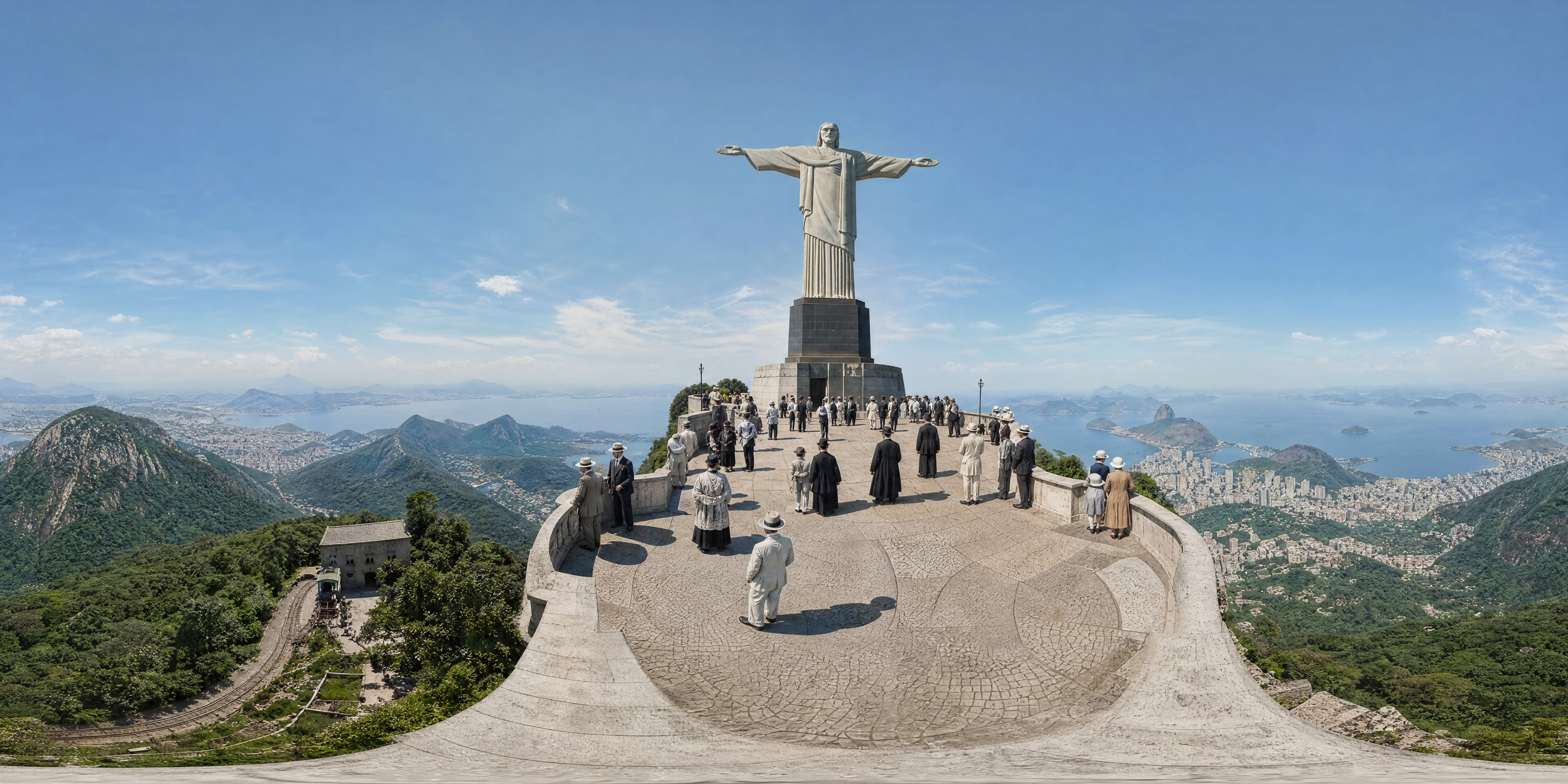
In October 1931, the newly finished statue of Christ the Redeemer is unveiled atop the Corcovado peak above Rio de Janeiro: a thirty-metre figure with arms outstretched over the city, bay and Sugarloaf, that becomes the emblem of Brazil.
- Year
- 1931
- Where
- Rio de Janeiro · BR
- Era
- modern_early
- Coordinates
- -22.952, -43.211
The moment
Nine years up a mountain
The statue was conceived to mark a century of Brazilian independence and built between 1922 and 1931 on the 700-metre granite peak of Corcovado, overlooking Rio.
It was designed by the Brazilian engineer Heitor da Silva Costa, with the figure modelled by the French-Polish sculptor Paul Landowski. The finished statue stands about 30 metres tall on an 8-metre pedestal, arms spread 28 metres wide.
Concrete and soapstone
Christ the Redeemer is built of reinforced concrete and faced with a skin of thousands of small triangular tiles of pale soapstone, a soft, durable stone chosen to weather the mountain's wind and rain.
Applying the tiles was painstaking work, and by tradition many local people, including women who wrote prayers and names on the backs of the tiles, helped lay them. Everything (concrete, stone, workers) was hauled up the steep slope on the cog railway that had climbed Corcovado since the 1880s.
The emblem of a city
Unveiled in October 1931, the statue quickly became the symbol of Rio de Janeiro and of Brazil itself, arms open above the city and the bay.
In 2007 it was named one of the New Seven Wonders of the World, and it remains one of the most visited monuments in the Southern Hemisphere: a modern landmark that, like the ancient wonders, was built to be seen from far off and never forgotten.
Further reading
Tagged
- rio
- christ-the-redeemer
- corcovado
- brazil
- art-deco
- new-seven-wonders
Published
See also

1912
Sinking position of RMS Titanic
At 2:17 a.m. on April 15, 1912, the RMS Titanic, split in half, has her stern rising vertically against the cold North Atlantic sky in her last minutes before plunging to the seabed.

1945
Times Square, New York
Late afternoon on August 14, 1945, sailor George Mendonsa grabs and kisses dental assistant Greta Friedman in Times Square as news of Japan's surrender breaks; Alfred Eisenstaedt's iconic Life photograph.

1922
KV62, Valley of the Kings
At the end of November 1922 in the Valley of the Kings, British archaeologist Howard Carter peers through a small hole in the sealed door of tomb KV62 and sees "wonderful things": the intact tomb of Pharaoh Tutankhamun.