Roman Forum, Rome
Around 120 AD, the Roman Forum is the crowded heart of an empire of fifty million: temples, basilicas and triumphal arches packed along the Sacred Way beneath the Capitol, with Trajan's new column and forum rising alongside.
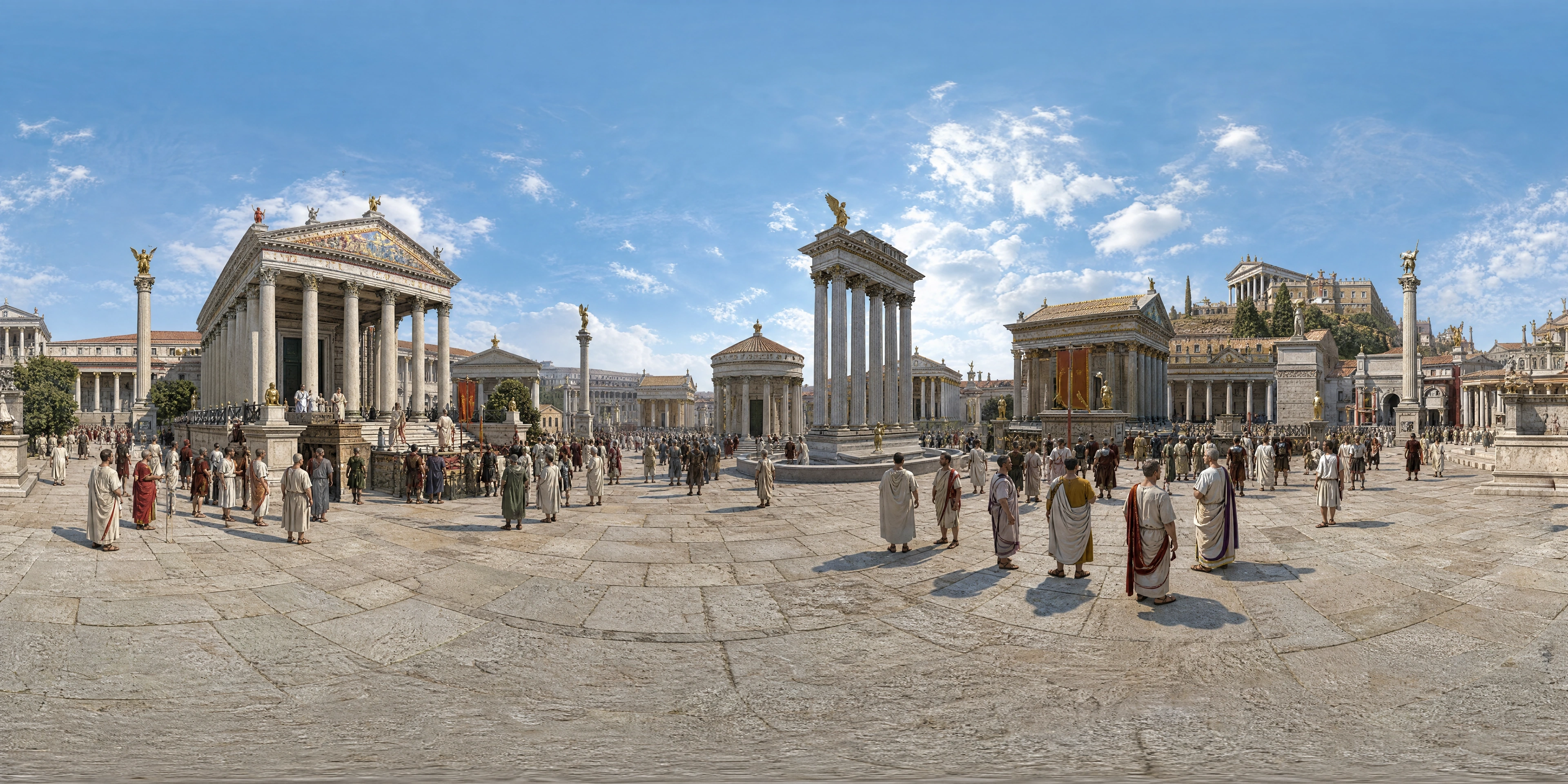
- Year
- 120s
- Where
- Rome · IT
- Era
- Classical antiquity
- Coordinates
- 41.892, 12.485
The moment
The centre of the world
The Forum was the heart of Rome and therefore of an empire of fifty to sixty million people. Elections, trials, triumphal processions, sacrifices, funerals and public speeches all happened in this one crowded valley, among temples, law courts and the Senate House.
To stand here in 120 AD was, in a real sense, to stand at the centre of the Western world.
Read in marble
By Hadrian's day the Forum was a showpiece of centuries of building, packed so tightly that emperors competed for space.
Painted marble facades, gilded bronze roof tiles, honorific columns and triumphal arches crowded together. Just to the north, Trajan's Column, finished in 113, spiralled some 30 metres of carved relief narrating the conquest of Dacia, and Trajan's Forum and Markets formed the grandest civic complex the city ever built.
From heart to cow field
After Rome fell, the Forum was quarried for its marble, buried under flood silt and rubble, and slowly forgotten.
By the Middle Ages it had become pasture (the Romans called it the Campo Vaccino, the "cow field"), grazed by cattle among half-buried columns. Systematic excavation from the eighteenth and nineteenth centuries uncovered it again. Today it is one of the most visited ruins on Earth, but the bare stone tells little of the painted, gilded, deafeningly busy heart of empire it once was.
Further reading
Tagged
- rome
- roman-forum
- empire
- hadrian
- trajan
- classical
Published · Updated
See also

79
Pompeii
On a late October afternoon in 79 AD, Mount Vesuvius unleashes a Plinian eruption that buries Pompeii under meters of pumice and ash within hours.

193
Legionary Fortress of Carnuntum
On 9 April 193, twelve days after the murder of Emperor Pertinax in Rome, the Pannonian legions proclaim their governor Lucius Septimius Severus emperor at Carnuntum, capital of Upper Pannonia on the Danube frontier. He wins the civil war that follows, founds the Severan dynasty and raises Carnuntum to the rank of a colony.

400s
Aksum
Around 400 AD, masons of King Ezana of Aksum raise a 24-meter granite stele carved to resemble a multi-story house: a monumental tradition unique to the Aksumite kingdom of Ethiopia.