Temple of Jupiter, Baalbek
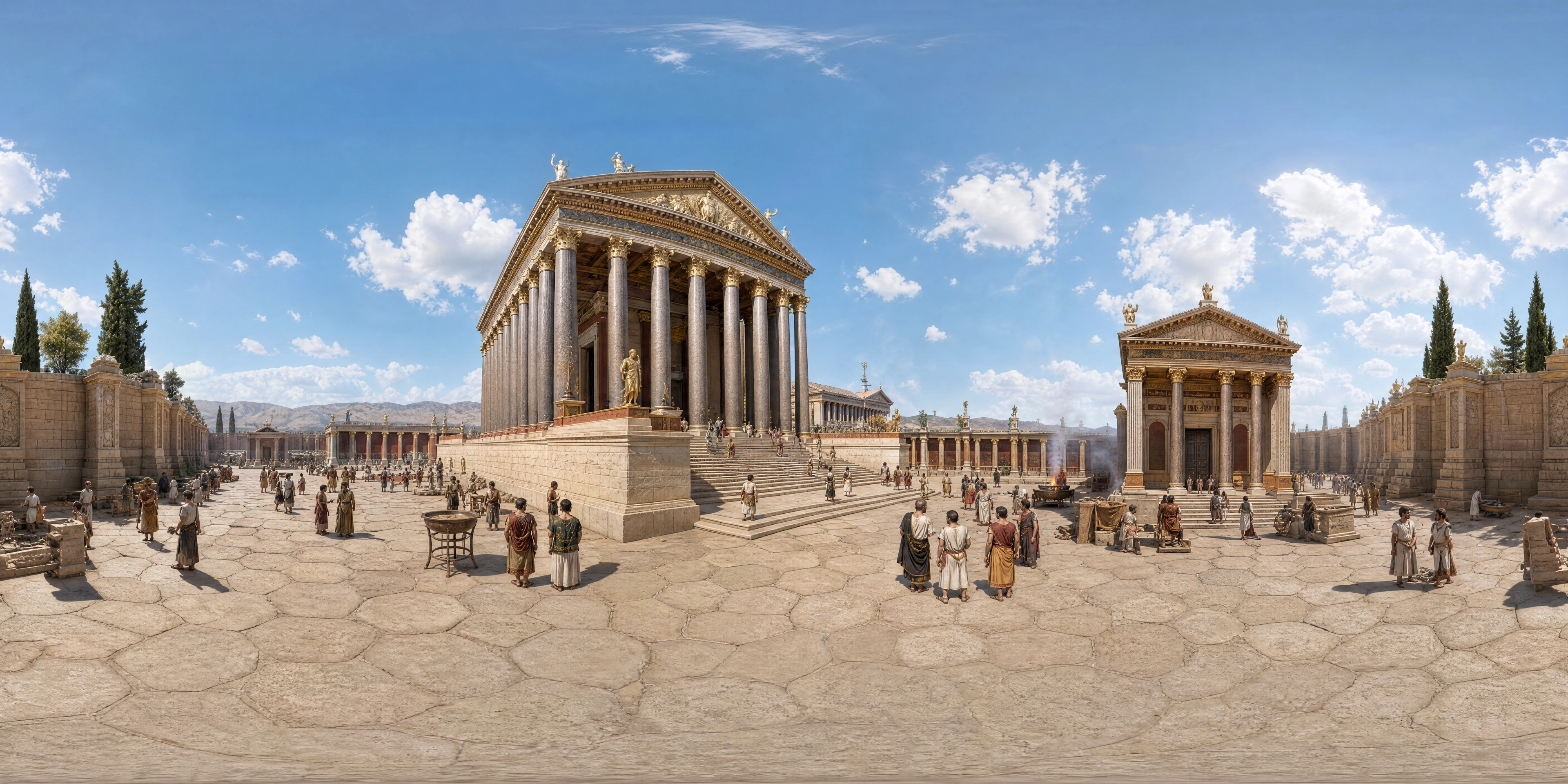
Around 150 AD, the Temple of Jupiter at Baalbek is one of the largest temples in the Roman world: columns nearly twenty metres tall on a platform of stone blocks weighing eight hundred tonnes, beside a quarry holding the heaviest cut stones ever moved.
- Year
- 2nd century AD
- Where
- Bekaa Valley · LB
- Era
- Classical antiquity
- Coordinates
- 34.007, 36.204
The moment
Columns like towers
The Temple of Jupiter at Baalbek was ringed by Corinthian columns nearly 20 metres tall and about 2.5 metres thick, the largest columns in the classical world.
Only six of them still stand today, having survived earthquakes that toppled the rest, and even those six are staggering to stand beneath. The temple was one of the largest in the entire Roman Empire.
The Trilithon
The temple's platform includes three limestone blocks, the Trilithon, each over 19 metres long and weighing roughly 800 tonnes.
In the quarry a short distance away lie even bigger stones: the so-called "Stone of the Pregnant Woman" and others exceeding 1,000 tonnes, cut but never moved. They are among the largest building blocks ever shaped by human hands. Exactly how the Romans intended to move them is still studied; and, as at Pumapunku, the sheer scale has attracted unfounded "lost technology" myths. The real answer is Roman engineering at its most ambitious.
Heliopolis
Baalbek was the Roman colony of Heliopolis, the "city of the sun," and its sanctuary was built up over more than a century.
Besides the Temple of Jupiter it includes the Temple of Bacchus: smaller, but one of the best-preserved Roman temples anywhere, its rich carving almost intact. Baalbek is a UNESCO World Heritage Site and remains one of the grandest Roman complexes in existence.
Further reading
Tagged
- baalbek
- heliopolis
- lebanon
- roman
- megalithic
- temple-of-jupiter
Published
See also

438 BC
Parthenon, Acropolis of Athens
In the summer of 438 BC, Athens dedicates the finished Parthenon at the Great Panathenaia: its Pentelic marble still bright with painted red, blue and gold, and inside stands Phidias's twelve-metre Athena of gold and ivory, at the peak of the city's brief golden age.

80
Colosseum, Rome
In 80 AD, Emperor Titus opens the Flavian Amphitheatre (the Colosseum) with 100 days of games, including the rare flooding of the arena for a mock naval battle.

79
Pompeii
On a late October afternoon in 79 AD, Mount Vesuvius unleashes a Plinian eruption that buries Pompeii under meters of pumice and ash within hours.