Eger Castle
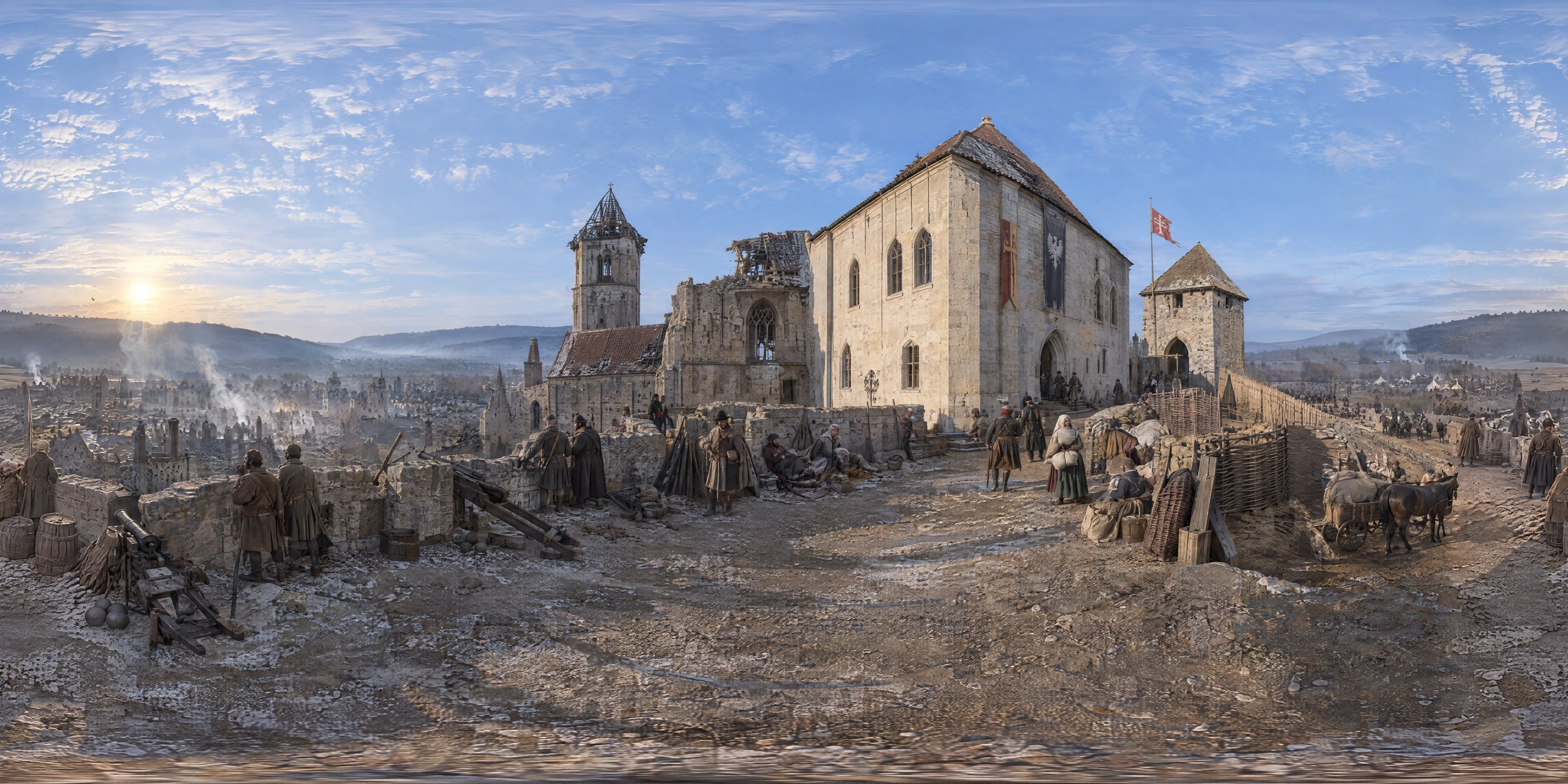
On 18 October 1552, after a 39-day siege, the last Ottoman troops under Ali Pasha of Buda march away from Eger, where about 2,000 defenders under István Dobó, helped by the town's women, have held the battered castle against an army many times larger. The victory became Hungary's great tale of heroism, retold in Géza Gárdonyi's novel Eclipse of the Crescent Moon.
- Year
- 1552
- Where
- Northern Hungary (Heves) · HU
- Era
- Renaissance
- Coordinates
- 47.905, 20.379
The moment
Thirty-nine days against an army many times larger
The siege of Eger began on 9 September 1552. It ended on 17 October, when the main Ottoman armies under Kara Ahmed Pasha and Sokollu Mehmed Pasha marched away. On 18 October the last of them, the troops of Ali Pasha of Buda, followed.
Inside the castle, István Dobó commanded a little over 2,000 people: professional soldiers, peasants and a few dozen women. Older accounts gave the Ottomans 150,000 to 200,000 men. Modern estimates put the army at 35,000 to 40,000, still many times the size of the garrison.
The powder tower blew up on 4 October
The worst blow came from inside. On 4 October a storage tower holding some 24 tonnes of black powder exploded, causing heavy damage and wrecking the sacristy of the cathedral of St John, which stood within the castle walls. The cathedral's roof had already been stripped so that guns could be mounted on its tower.
The defenders improvised. Gergely Bornemissza, who commanded 250 infantry, devised crude grenades and bombs, and a water-mill wheel packed with gunpowder that was rolled into the Ottoman ranks. The women of Eger joined the defence, a scene fixed in the painting Az egri nők, "The Women of Eger".
By the end the walls of pale rhyolite tuff were breached and patched with earth, timber and wicker, and the town below lay in ashes: Dobó had set it alight himself before the siege. Between 400 and 600 defenders were dead.
The castle fell anyway, in 1596
The victory bought Eger 44 years. The Gergely and Zárkándy bastions went up between 1553 and 1556, but in 1596 the castle surrendered to a new Ottoman army, and its 7,000 defenders, mostly foreign mercenaries, capitulated.
The minaret the Ottomans built after 1596 still stands in the town below.
Why every Hungarian child knows the siege
Hungary learned the siege from a novel. Géza Gárdonyi's Egri csillagok, literally "Stars of Eger", published in English as Eclipse of the Crescent Moon, appeared in instalments from 1899 and as a book in 1901. It follows the life of Gergely Bornemissza and is compulsory reading in Hungarian schools.
Like the older accounts, the novel gives the Ottomans a far larger army than modern historians allow. It made the siege Hungary's great tale of heroism all the same.
Gárdonyi is buried in the castle, in the Bebek bastion. By his wish, the wooden cross on his grave carries the words Csak a teste, "only his body". The castle has been a national memorial site since 2014.
Eger's red wine, Bull's Blood, has its own siege story: the Ottomans are supposed to have taken the wine on the defenders' beards for bull's blood. It is a legend.
Sources
Further reading
Tagged
- hungary
- eger
- siege
- ottoman-wars
- dobo-istvan
- castle
- renaissance
- egri-csillagok
Published
See also

1539
Château de Chambord
On 18 December 1539 Francis I receives his old rival, Emperor Charles V, at Chambord, the vast hunting castle whose keep, bristling with chimneys, lanterns and dormers, has just been finished in the marshes of Sologne. The emperor, crossing France on his way to Ghent, is said to be dazzled; the visit shows off the French Renaissance at its most ambitious.

1500
Golden Roof, Innsbruck
In 1500 King Maximilian I, who often holds court in Innsbruck, completes a splendid oriel on the princely residence, roofed with 2,657 fire-gilded copper shingles. From its loggia, the Golden Roof, he and his court watch tournaments and performances in the square below.

15th century AD
Great Wall of China, Jinshanling
Around 1500, Ming China rebuilds the Great Wall in brick and stone across the mountain ridges north of Beijing: a battlemented rampart with watchtowers that climbs and plunges over the peaks as far as the eye can see, the most ambitious fortification ever built.