Glenfinnan, Loch Shiel
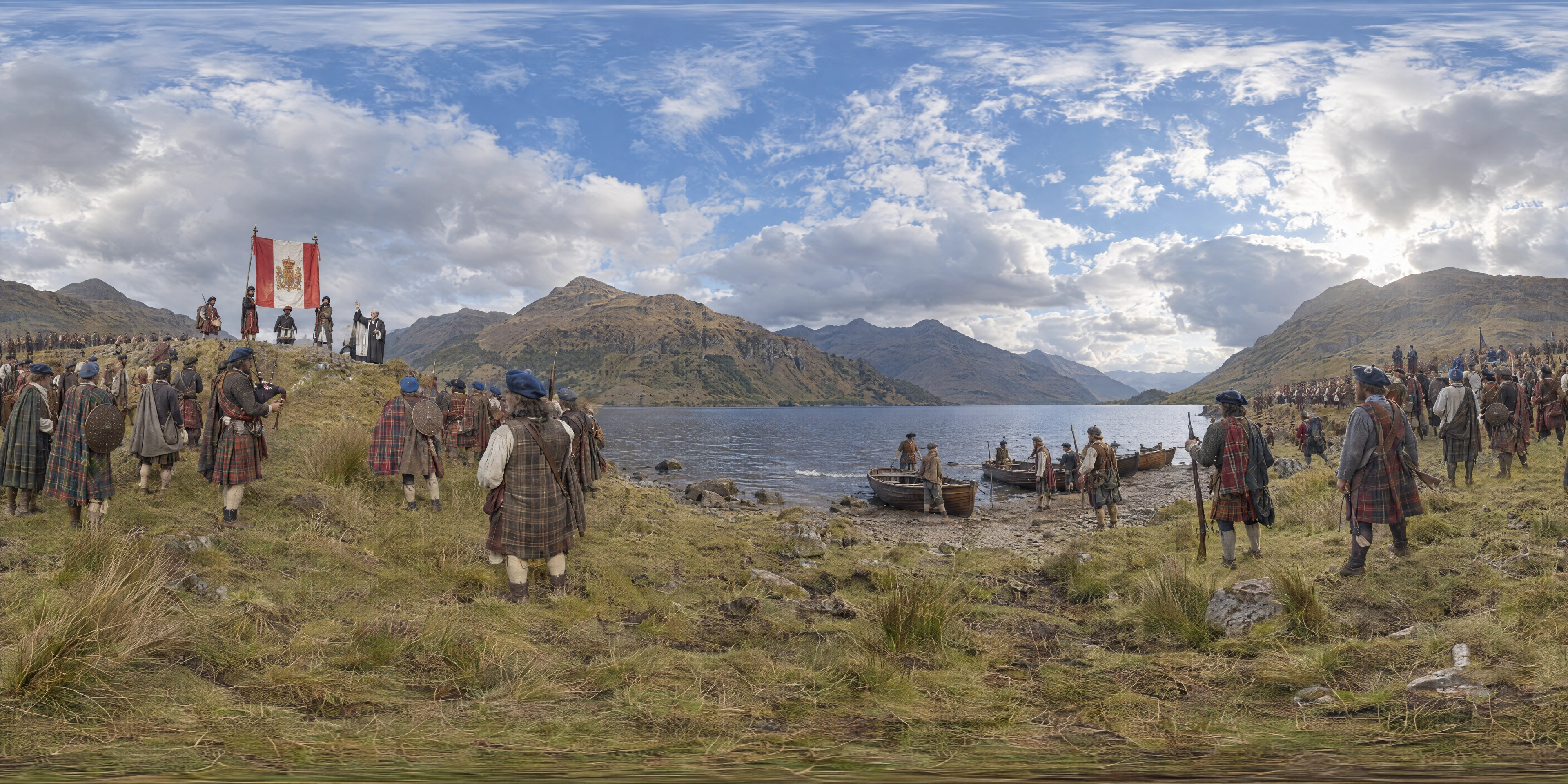
On 19 August 1745 Charles Edward Stuart, landed from France four weeks earlier, raises his father's standard at the head of Loch Shiel, and the Camerons of Lochiel march in to join him, some 700 men by one eyewitness count. The last Jacobite rising has begun; it will end at Culloden eight months later.
- Year
- 1745
- Where
- Lochaber, Scottish Highlands · GB
- Era
- Early modern
- Coordinates
- 56.870, -5.437
The moment
The rising began with a guarantee for an estate
Charles Edward Stuart landed on the island of Eriskay on 23 July 1745 with far less than he had planned. The old warship carrying his weapons and 100 volunteers of the French Army's Irish Brigade had been forced back to port after a four-hour fight at sea, and he came ashore from the privateer Du Teillay with the small party later called the Seven Men of Moidart.
Many of the Highland leaders he contacted told him to go back to France. Donald Cameron of Lochiel committed himself only after Charles gave security for the full value of his estate should the rising fail.
Seven hundred men at the head of the loch
On 19 August, at the head of Loch Shiel where the River Finnan runs out of its glen, the Marquis of Tullibardine unfurled the royal standard after a blessing by the Catholic bishop Hugh MacDonald. The 24-year-old prince proclaimed his father King James VIII and III.
The Camerons came down the glen to join him with pipers playing. John O'Sullivan, the Irish exile who served as Charles's chief of staff, estimated the Highlanders present at around 700.
No contemporary description of the standard survives. It is said to have been of red silk with a white centre, sewn by the ladies of Kinlochmoidart, and the exact spot where it was raised is traditional, not recorded.
Eight months from Glenfinnan to Culloden
The rising moved fast. Charles entered Edinburgh unopposed on 17 September, and four days later his army scattered the government troops of Sir John Cope at Prestonpans in less than 20 minutes. It invaded England and reached Derby on 4 December, where, with no sign of English support or a French landing, his council voted to retreat.
A narrow victory at Falkirk Muir in January 1746 could not save it. On 16 April the government army won at Culloden in less than an hour, and between 1,200 and 1,500 Jacobites died. Charles evaded capture with the help of Flora MacDonald and was taken off by a French ship in the Sound of Arisaig on 20 September. He died in Rome in 1788.
Why Glenfinnan is remembered more kindly than it was
Glenfinnan opens the most romanticised chapter of Scottish history, and the Jacobite rebellions of 1715 and 1745 are a named topic even in England's curriculum. The romance came later. Walter Scott's novels reconciled the '45 with loyalty to the Union, and in 1822 Cumberland's great-nephew, George IV, wore Highland dress in Edinburgh.
The rising itself was a civil war that divided Scots, not a simple contest between Scotland and England, and many who joined it were fighting the Union rather than the House of Hanover. It ended in harsh repression.
The 18-metre tower at the loch head, raised in 1814 by Alexander Macdonald of the Clanranald Macdonalds to honour the Highlanders who fought, was paid for partly with wealth from his father's slave plantations in Jamaica. Since 2021 the National Trust for Scotland's visitor centre has told that part of the story.
Sources
Further reading
Tagged
- united-kingdom
- scotland
- highlands
- jacobites
- bonnie-prince-charlie
- 1745
- clans
- early-modern
Published
See also

1618
Prague Castle (Ludwig Wing)
On May 23, 1618, Bohemian Protestant nobles throw two imperial Catholic regents out of the upper window of the Ludwig Wing of Prague Castle, triggering the Thirty Years' War.

1650s
Tōkaidō road, Mt. Fuji
Around 1650 AD, a daimyō and his retinue of 2,000 retainers march along the Tōkaidō road past Mt. Fuji on the mandatory alternate-year residence journey to Edo: the Tokugawa shogunate's masterstroke of social control.

1640s
Taj Mahal under construction, Agra
Around 1640, the white marble dome of the Taj Mahal rises on its riverside platform at Agra: some twenty thousand workers and a thousand elephants raising Shah Jahan's tomb for his wife Mumtaz Mahal, partway through a project that will take more than twenty years.